By Sarah Frink
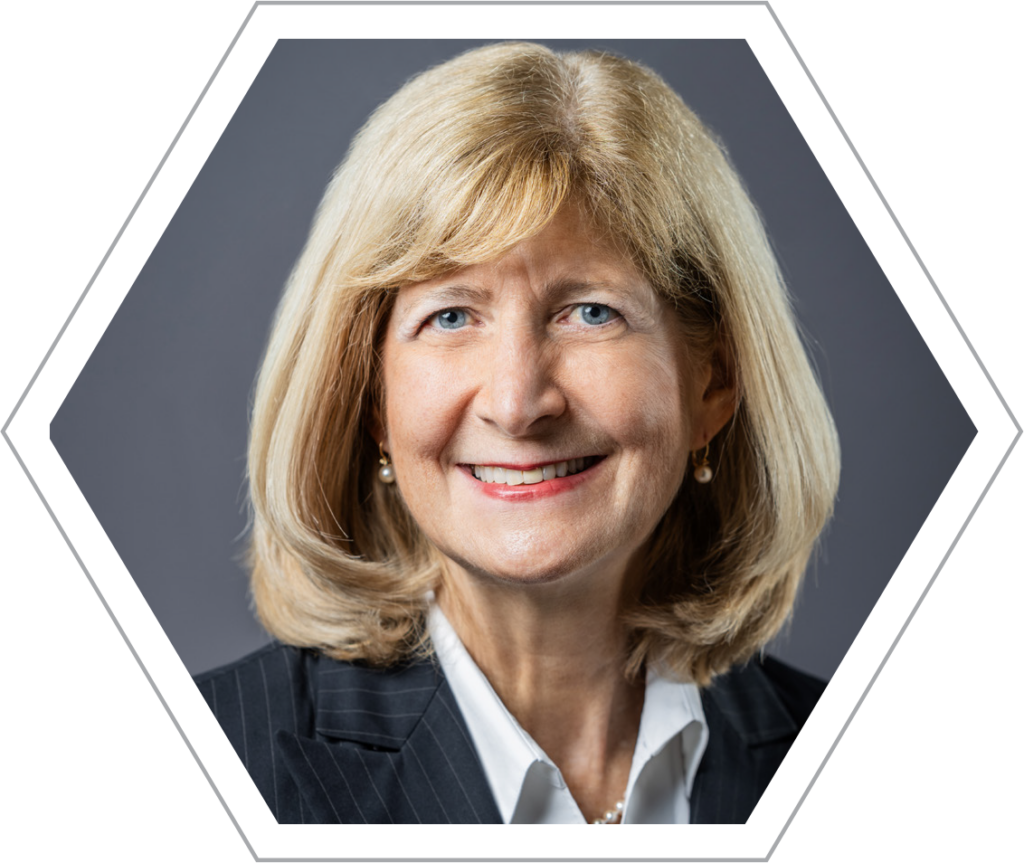
Over the course of a career spanning four decades, chemist Christina “Chris” Bodurow ’79 has worked at the intersection of industry and academia, helping bring life-changing drugs to market, mentoring young scientists, and supporting professional communities across her discipline. This year, she stepped into one of the most visible roles in her field as president-elect of the American Chemical Society, a global organization with more than 230,000 members in 195 countries and regions. The appointment reflects not only her scientific expertise, but a long record of service to the profession. It also reflects a journey shaped by mentors who recognized her potential and helped her imagine what a life in chemistry could be.
Bodurow’s path began with a catalytic moment in tenth grade, when she met the kind of science teacher who recognized her curiosity and cultivated a nascent interest. He handed Bodurow her first organic chemistry book and welcomed her into the lab after school to run experiments. By the time she was looking at colleges, her direction was already clear: She arrived at Kalamazoo College knowing she would major in chemistry, and she never looked back.
At K, that early interest found structure and opportunity. Bodurow credits several faculty members with shaping both her education and her confidence as a young scientist.
“I had some amazing professors at Kalamazoo College,” Bodurow said. “The first was Kurt Kaufman, who was legendary for his organic chemistry courses. I took all three of them and absolutely loved them.”
Later, Tom Smith, who was then new to the department, took Bodurow and her fellow senior chemistry majors under his wing, helping prepare them for graduate study and future careers. “Tom and another chemistry professor, Richard Cook, were instrumental in launching many K College chemists,” she said.

Looking back, she sees a clear throughline: “There’s a string of professors, teachers, people who really nurtured that love of chemistry and chemistry learning,” she said. “And I feel really lucky to have had all of those people in my life.”
Her K experience included study abroad in Erlangen, Germany, where she continued to challenge herself academically. She enrolled in an organic chemistry course at the University of Erlangen–Nuremberg; only later did she discover that the professor teaching the course, Paul von Ragué Schleyer, had recently come from Princeton University, where she would soon pursue graduate study. “That was kind of a small world story,” she said.
After graduating from K, Bodurow earned her Ph.D. in organic chemistry at Princeton. As she prepared to transition from graduate school to a career, mentorship again proved pivotal. Ted Taylor, a Princeton professor of organic chemistry and a leading heterocyclic chemist, helped open the door to industry by connecting her with the pharmaceutical company Eli Lilly, where he served as a consultant.
“I had an interview at the Eli Lilly Corporate Center in Indianapolis, and had an amazing two days,” she said. “I had visited six companies at this point, but this one really resonated. One of the main applications of organic chemistry is working in medicine development, so it all came together in a way that made sense for what I wanted to do post-Ph.D.”
She joined Eli Lilly and Company and ultimately spent 33 years there, working across a range of scientific and operational leadership roles. Over the course of her career in the pharmaceutical industry, Bodurow witnessed firsthand what it takes to bring a medicine to market through years of hard work and persistence.
One such experience was her role as global R&D operations leader for the Prozac product team. Prozac, she noted, “revolutionized the treatment of depression and anxiety and a host of psychiatric disorders.” She recalled receiving hundreds of letters from patients’ family members describing how the medication changed their loved ones’ lives.
“It was incredible to see how 15 to 20 years of nonstop scientific discovery, clinical research and clinical development could actually result in these very powerful compounds that were changing people’s lives. That experience drove all of us—anybody who works in the pharmaceutical industry— to do more and get better at what we were doing to help mankind.”
While working in industry, Bodurow also maintained a strong connection to academia. For seven years after arriving in Indianapolis, she served as an adjunct professor at Butler University and Indiana University
Indianapolis, teaching in graduate programs while continuing her work at Lilly. The combination reflected her interest in both environments.
“Industry science is driven by corporate goals and missions,” she said. “Academia is driven by education and research. And frankly, I’m interested in both. Both are very important to the scientific enterprise.”
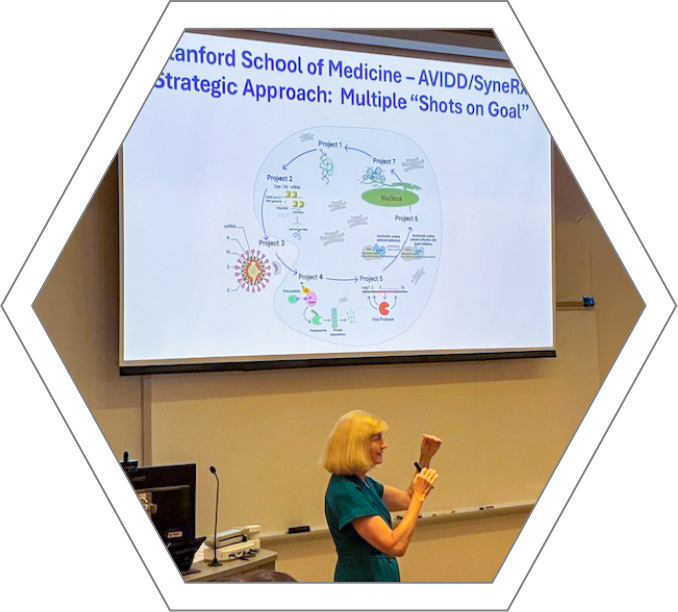
After retiring from Lilly, Bodurow spent three and a half years at IQVIA, first as the vice president of strategy and operations for data science, statistics and regulatory and subsequently as vice president for global regulatory affairs. She then served as deputy director of the NIH/NIAID antiviral drug discovery center grant at the Stanford School of Medicine, and is currently senior vice president, project management, for the Indiana Biosciences Research Institute.
Together, these experiences have shaped her leadership philosophy. Effective scientific leadership, she believes, begins with clarity of mission.
“Job number one as a leader is to make sure that you have a well-articulated mission, vision, and goals for your scientific organization,” she said—goals that are “transparent and authentic” and that people can understand and buy into. From there, leaders must keep teams aligned, moving forward, and motivated in ways that resonate.
“Scientists are motivated by all sorts of interesting things that are not necessarily money,” Bodurow notes. Opportunities to present their work, share progress with the broader scientific community, and receive awards for their contributions can be just as powerful. For leaders, she says, the challenge is understanding what kinds of recognition resonate most within a particular organization, so that scientists feel both valued and satisfied in the work they are doing.
Bodurow’s relationship with the American Chemical Society began early. As a student and graduate researcher, she relied on ACS publications and Chemical Abstracts to learn more about the topics she was researching. Presenting her work at a national ACS meeting as a third-year graduate student was a formative experience.
“I was fortunate to have an advisor that was very supportive and had financial ability to allow me to go to a national ACS meeting and present,” Bodurow said. “It was an absolutely amazing experience to be in a room with a couple hundred people, presenting research that you’ve done as a junior member of the scientific community, with people taking it very seriously and asking a lot of questions. I had gotten into an area of research that was of high interest, and I remember that in the first two rows of the auditorium, there were people with cameras taking pictures of my slides!”
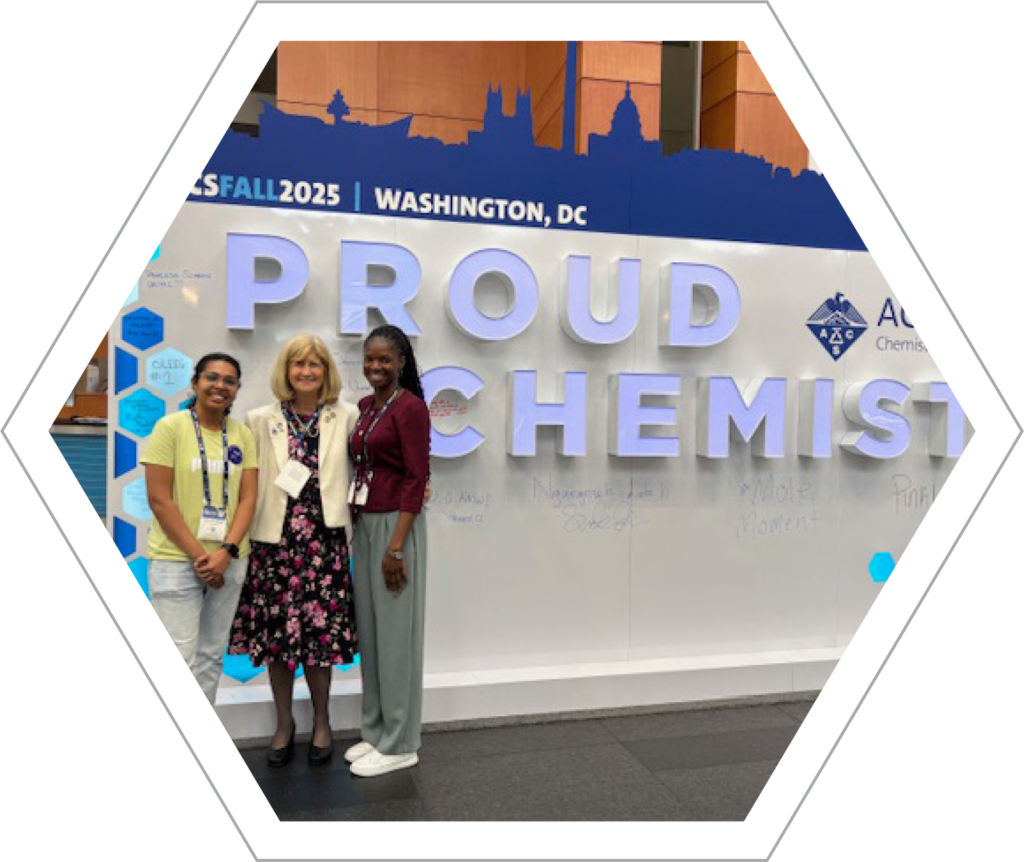
At Eli Lilly, ACS participation was part of the professional culture. “Nearly everybody who was a chemist at Lilly when I joined the company was also a member of the ACS,” she said. Publishing in ACS journals and attending meetings were expectations, rather than exceptions. “I published half a dozen articles in my first five years at Eli Lilly in various ACS journals.”
One of Bodurow’s most enduring contributions to ACS began in 1989, through her service on a diversity committee in Lilly’s research laboratories.
“The president of Lilly’s research labs was very forward-thinking, and in the mid ‘80s, he was concerned that there were not enough women and minority candidates coming into the labs, and into the pipeline that we would be recruiting from, so he started a committee called Females and Minorities in Lilly—FAMILY,” Bodurow said.
The committee decided to establish travel awards for several professional societies. Bodurow worked with the ACS Women Chemists Committee to create what became the WCC – Lilly Travel Award. More than three decades later, the program has supported more than 800 young women scientists in attending their first scientific meetings and presenting their research.
“That really established a strong bond for me with the ACS,” she said.
Her involvement continued, including service on the board of directors from 2017–22 and culminating in her recent election as president-elect. For Bodurow, the role represents what she calls “the ultimate service opportunity” in a professional society. It also coincides with a milestone moment: ACS will celebrate its 150th anniversary in 2026. “I feel incredibly lucky to be able to be a part of that celebration,” she said.
Looking ahead, Bodurow has identified three priorities for her presidential term. The first is continuing to expand ACS’s multidisciplinary approach. Bodurow emphasized that addressing a range of global challenges—from pharmaceutical development to providing energy solutions—requires scientists from multiple disciplines to work together in integrated ways.
Her second priority is strengthening ACS’s connection to industry chemists. Industry membership has been on the decline in recent years, but these professionals remain a vital part of the society’s membership, and she hopes to work with ACS committees, divisions and staff to retain and grow that segment.
The third priority reflects an important convergence in her own life: chemistry and the arts. Bodurow credits her parents, and particularly her father, with her early exposure to the arts.
“All the kids in my family played two instruments. We were involved in ballet and theatre and all those great things. So even before I was a chemist, I was already a musician.”
At K, she continued those pursuits, taking organ and piano lessons and playing piano in the jazz band for four years, even as she completed a rigorous chemistry curriculum. Today, she observes that many chemists are similarly engaged in artistic pursuits. As ACS president, she hopes to explore the commonalities between the two disciplines and incorporate that into programming and leverage the arts as a way to connect with the public about chemistry.

Bodurow also speaks candidly about the challenges facing scientific communities today, including public skepticism of scientific expertise and debates around inclusion. Inclusion and belonging, she said, are core values of ACS and have been embedded in the society’s work for decades. Public trust is an ongoing focus, supported by ACS communications, educational programs, and efforts to help members better explain their work and engage in constructive dialogue with those outside the scientific community.
“The American Chemical Society is a global professional chemical society,” Bodurow said, “and as the president, you are the president of all members. Our duty is to continue to think about how to advance the society on all fronts: scientific, geographically, and from a belonging and inclusion perspective.”
Even as she herself has developed a global professional footprint, Bodurow remains deeply connected to Kalamazoo College. She helped lead the effort to endow the Thomas J. Smith Student Research Fellowship in Chemistry, which supports students’ independent summer research and honors her former professor, who continued to nurture, challenge and launch chemistry students for 40 years at K. She currently serves on the College’s Board of Trustees and speaks often about the lasting value of a K education. The broad liberal arts foundation, the strong community, and the breadth of experience available on campus, she says, create “a lifelong learning experience like no other.”
For current Kalamazoo College students interested in chemistry, Bodurow encourages students to take full advantage of K’s science programs, build relationships with professors, and seek out laboratory experience early—through internships, summer research, or the Senior Integrated Project. And of course, she recommends getting to know the profession through ACS publications and meetings and finding mentors beyond the classroom who can offer perspective on life and careers in chemistry.
“The American Chemical Society has over 1,000 student chapters at universities and colleges all over the world to help students understand chemistry as a profession, participate in programs, have fun and make friends,” Bodurow said. Through accredited degree programs, travel awards, and targeted initiatives for early-career chemists, the American Chemical Society offers a range of pathways for students and young scientists to engage with the profession, present their work, and build lasting connections within the chemistry community.
From a high school classroom to Kalamazoo College, from industry laboratories to national scientific leadership, Bodurow’s career reflects a defining thread of mentorship, opportunity, and service. As she prepares to lead the American Chemical Society into its next chapter, she brings not only decades of scientific and organizational experience, but a guiding conviction: science advances when opportunity is accessible to all.

fellow K chemistry grad, Ed Hortelano ’83.