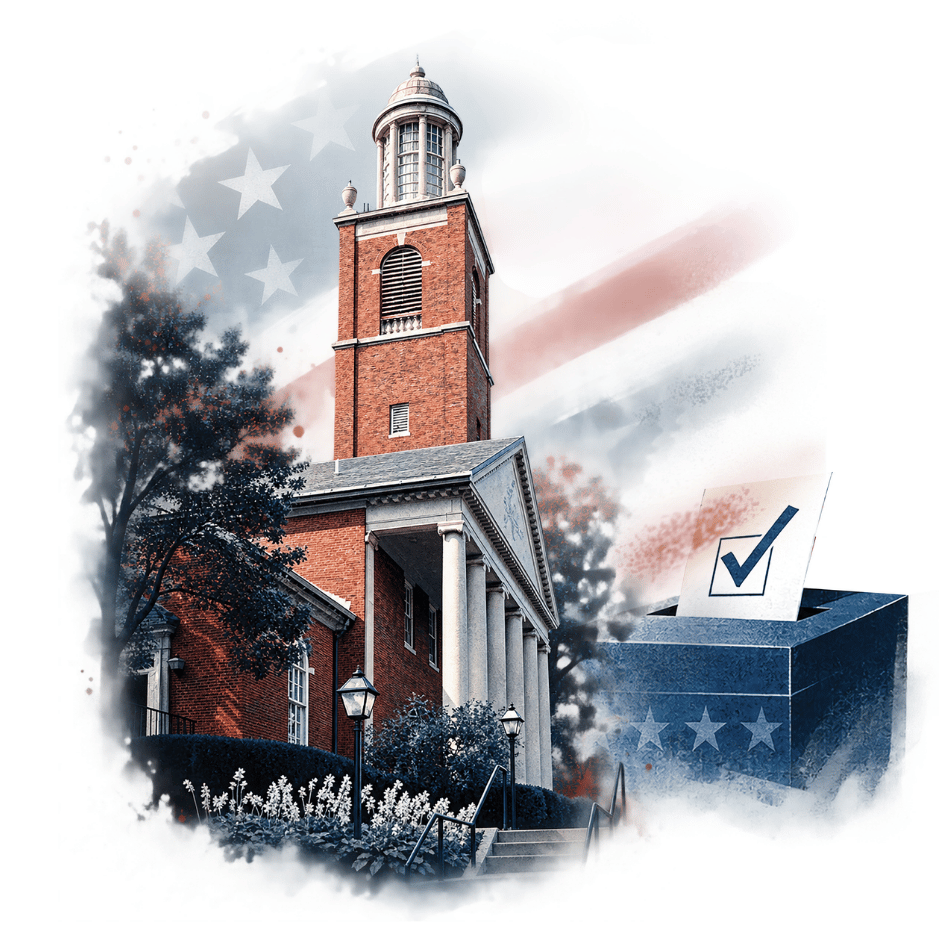
The Bell Tower and the Ballot Box
By Andy Brown
In the years before voters could ask their phones anything, they called Vote Smart’s 800 number, where real people answered their questions about politics, voting records and public policy.
Founded by Richard Kimball with a board that included Presidents Jimmy Carter and Gerald Ford, along with other leaders across the political spectrum, Vote Smart set out to fill a need for information that was unbiased and nonpartisan.
More than three decades later, the organization fields about a billion requests for information each year and has become a trusted resource not only for voters, but also for journalists, researchers and educators. Even The New York Times has turned to Vote Smart when searching for difficult-to-find political information.
For Kalamazoo College alumnus Kyle Dell ‘93, Vote Smart’s executive director and CEO, the mission has remained remarkably consistent through all of it: helping Americans make informed decisions based on facts rather than rhetoric. The only thing that’s changed much is technology.
“The power of AI has allowed us to develop a third act for what Vote Smart does,” Dell said. “We wanted to bring together the depth and breadth of our database, which has hundreds of millions of pieces of information in it, but do it in a way that mimicked the experience of talking to a human because that’s what we all want to do.”
Leading the organization through an era defined by political polarization, declining trust in institutions and the rapid rise of artificial intelligence has required balancing innovation with caution. For Dell, those challenges trace back to lessons he first began exploring as a political science student at K.
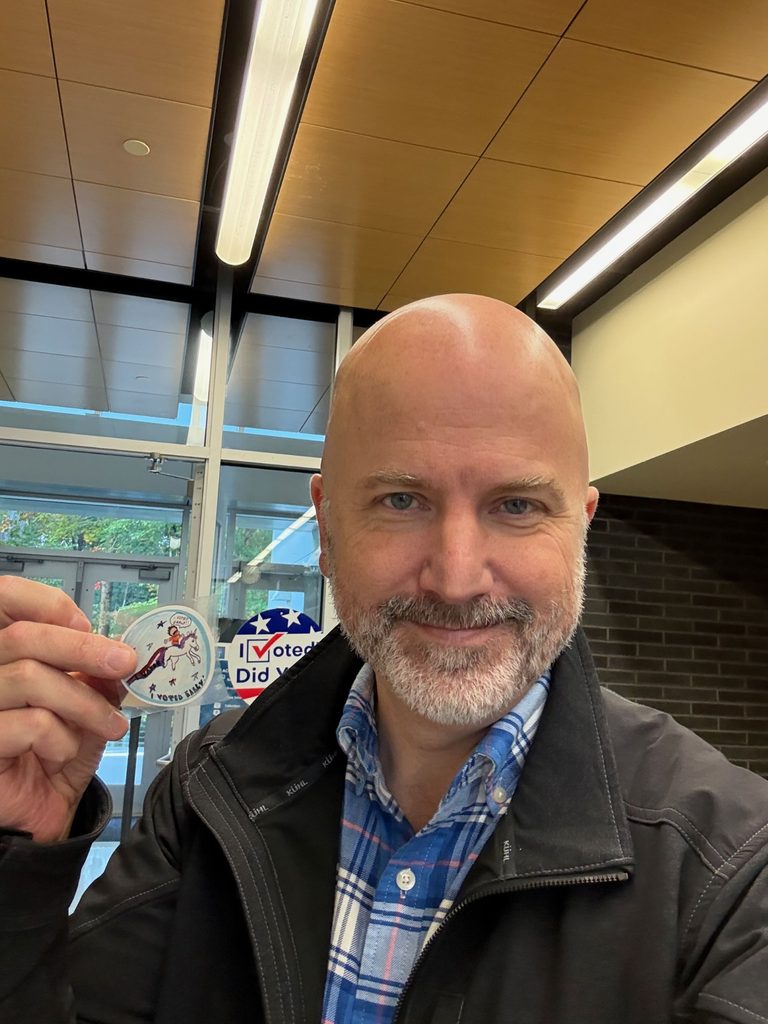
A lifelong interest in politics
Dell transferred to K as a sophomore, already convinced that politics would become his life’s work. K furthered his ambitions.
“I was completely and hopelessly captivated by my whole experience at Kalamazoo,” he said. “The political science department and my fellow students were incredible, challenging and supportive people, who I stay connected with even today.”
The K-Plan quickly immersed him in experiences beyond the classroom. During his sophomore year, he completed an internship on Capitol Hill in Washington, D.C., describing it as one of the most rewarding and demanding experiences of his career.
Back on campus, Dell completed a Senior Integrated Project examining constitutional, legal and cultural approaches to presidential war powers, an experience that prepared him for graduate studies at Boston College, where he earned both his master’s degree and Ph.D. before spending 25 years teaching American and environmental politics.
Yet even while pursuing an academic career, Dell never drifted far from Vote Smart. He first worked for the organization during graduate school in the 1990s. He then remained involved for years and eventually joined its board of directors.
“It stood out to me when I studied American politics with Dr. Donald Flesche at Kalamazoo and through my graduate degrees that polarization and civic incivility are not good dynamics for American politics,” Dell said. “They tend not to produce the results that are good for our democracy. I understood that if I ever wanted to have real experiences in politics, I didn’t want to sign up for one side or the other. I was drawn to different organizations that want to serve everyone. Vote Smart, at its core, has that as its mission.”
When Kimball announced his retirement after leading the organization for nearly 40 years, the timing unexpectedly aligned with Dell’s own career transition after relocating to Pennsylvania with his wife, Erin Brownlee Dell ’93.
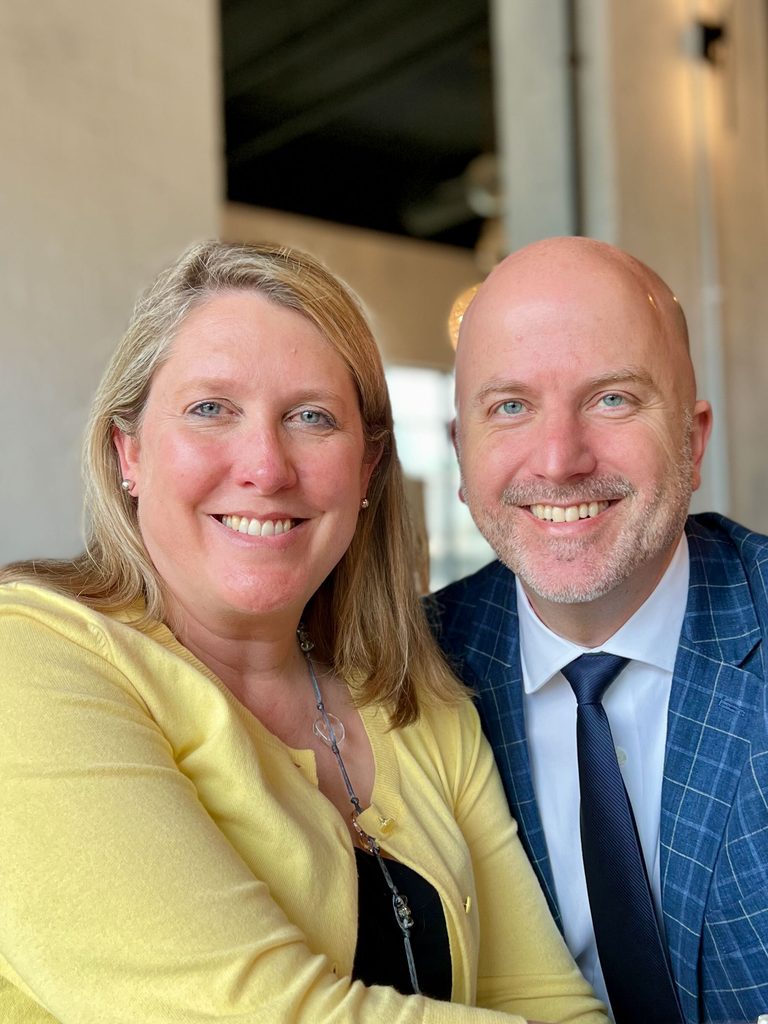
“I was the trailing spouse, as people might describe me, and I came here without a position lined up,” Dell said. “It was a good coincidence. He was ready to retire and I needed a new opportunity.”
Facts for all
With his role, whether someone identifies as a Democrat or a Republican, liberal or conservative, Dell believes everyone benefits when basic political information is accurate, transparent and accessible.
“I think that civic literacy is one of those tools that helps us access our full citizenship,” he said. “We might not feel politically engaged today with other demands in life, but a lot of us can imagine things happening where a loved one gets sick and we realize our healthcare system is not the way we want it to be, or a local environment is impacted by bad policy.”
Today, however, facts are harder to find than information. When Vote Smart began in the late 1980s, political information was scarce. Printed voter guides and telephone hotlines filled an important gap. Now, Americans face the opposite problem.
“We’re bombarded by information,” Dell said. “It’s not scarce, but trusted information is probably scarcer today than it was then. People must figure out who to trust, now and over time.”
He worries that many online platforms reward outrage more than understanding, pulling people into what he calls “rage bubbles” that reinforce existing beliefs instead of encouraging thoughtful engagement.
That’s where Vote Smart helps fill a gap. An informed citizen, Dell argues, isn’t simply someone who follows politics every day. They’re someone equipped with enough civic knowledge to recognize manipulation, ask good questions and engage thoughtfully when important issues eventually arise.
“At some point, our lives are touched by politics in powerful ways,” Dell said. “If we’re ready with basic civic literacy tools for the moments we need them, we’re going to be better off.”
AI with guardrails
Artificial intelligence complicates the landscape of voter information. Although it promises easier access to information, it has also raised concerns about misinformation, fabricated answers and so-called technology hallucinations.
Rather than viewing those challenges as reasons to avoid AI, Dell saw an opportunity to build something different. Vote Smart’s new tool, Civic Sage, doesn’t search the entire internet. Vote Smart intentionally restricted the system to its own carefully curated database, which was built over decades through original government documents, voting records and verified public information.
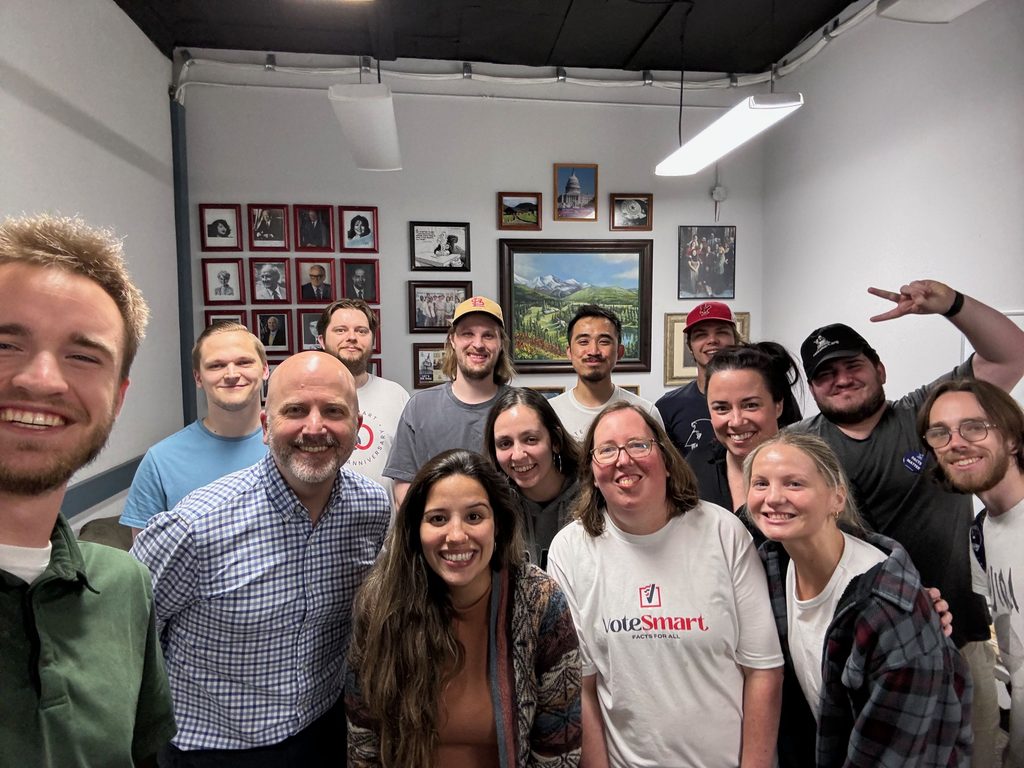
Around the office, Dell jokes that Civic Sage lives in “fact jail.”
“We wanted to keep it inside our own database,” he said. “It drastically reduces the likelihood that it’s going to hallucinate.”
The approach also reflects Vote Smart’s longstanding philosophy of showing its work. Whenever possible, the organization links users back to original documents, encouraging people to examine the evidence for themselves.
Dell believes that kind of transparency will become increasingly important as AI tools become more common. Plus, Civic Sage’s easy-to-use interface resembles most language-model AI tools such as ChatGPT. Visitors can easily ask Civic Sage about local, state and national representatives; their biographies and voting records; legislation and ballot measures along with what they mean; special interest groups and political influence; and how government works.
“I don’t think we have all the answers yet,” he said. “But if we’re honest about how we’re using these tools and transparent about how they work, we have a chance to move forward in a way that keeps us rooted to a more human experience.”
The liberal arts advantage
Although technology continues to evolve, Dell believes some of the most important civic lessons remain profoundly human. He points to colleges and universities, particularly institutions of the liberal arts and sciences, as places where students learn to navigate differences, encounter unfamiliar perspectives and build communities that extend beyond politics.
Vote Smart has long partnered with colleges through internship programs, attracting hundreds of applicants each semester from students studying everything from political science to music and studio art. Some arrive eager to pursue careers in government. Others simply want to better understand how democracy works without feeling pressured to choose political sides. But Dell believes both groups benefit by working together to help those who seek factual information.
His own K experience reinforces that belief. One memory that stands out at the College was ringing the tower bells at Stetson Chapel. Dell describes the bell-ringing community—and faculty members Jeff and Carol Smith, who served as mentors to generations of student bell ringers—as one of the defining experiences of his college years. Looking back, he sees an unexpected metaphor for democracy.
“You can’t do it by yourself,” he said. “You have to do it with other people. It takes about a month to learn to do it well. But once you have those basic skills, you can be a part of something bigger than what you could do on your own.”
Everyone has a role. Everyone must show up. In an era when politics often seems defined by division, it’s a lesson he continues to carry from the bell tower to one of the nation’s leading civic education organizations. Although technology changes how Americans access information, democracy still depends on people willing to listen, learn and work together.
“If I do what I’m supposed to do, and you do what you’re supposed to do, you have a chance of making something really beautiful.”